

At F4S, we’re passionate about helping students discover the real-world possibilities behind the subjects they study in school. On Tuesday 28 April 2026, we were delighted to host a M4G Virtual Assembly in partnership with CIBC, where students heard directly from four inspiring women working across global financial markets and corporate banking.
Students were joined by:
- Caylor Chen – Fixed Income Trader
- Mathilde Lauze – Credit Financing Trader
- Lucy Brown – Global Credit Financing Sales Director
- Jenny Milyutina – Executive Director, Corporate Banking
Together, they shared honest insights into their career journeys, their experiences studying maths and STEM subjects, and what it’s really like working in finance today.
Bringing Finance to Life
One of the most engaging parts of the session was how each speaker explained complex financial roles in simple, relatable ways. Caylor Chen compared fixed income trading to a savings account, explaining how traders buy and sell financial products such as bonds and swaps in global markets. She shared how her role involves making quick, data-driven decisions while also building financial models and improving systems behind the scenes.
Mathilde Lauze described trading like running a second-hand fashion store — assessing the value of products, understanding demand, and deciding the right price to buy and sell items. Her analogy helped students understand that trading is not just about numbers, but also judgement, instinct, and learning through experience.
Lucy Brown used a fruit market analogy to explain how salespeople and traders work together on a trading floor. While traders analyse the market and pricing opportunities, sales teams communicate with clients, build relationships, and help connect people with the right financial solutions.
Meanwhile, Jenny Milyutina gave students insight into corporate banking and how companies —
much like individuals — need financing to grow, invest, and operate. She highlighted how her work supports large insurance companies and financial institutions with funding solutions and long-term partnerships.
Maths Is Important — But It’s Not Everything
A key message throughout the session was that careers in finance are about far more than being “good at maths.” Lucy Brown addressed one of the biggest misconceptions about finance careers: “Everyone says, ‘You work in finance, you must be amazing at maths.’ Maths is one part of what I do, but it’s definitely not the biggest part.”
The speakers also reassured students that nobody enters these careers knowing everything. Learning on the job, asking questions, and gradually building confidence were all highlighted as essential parts of professional growth.
Different Paths, Shared Confidence
Another powerful takeaway from the session was that there is no single “perfect” route into finance.
The speakers came from incredibly varied educational and cultural backgrounds: Caylor studied physics in both China and the UK before transitioning into finance. Mathilde moved from France to the UK after studying business and finance. Jenny built her career in Toronto before relocating to London. Lucy followed the UK state school and university system, studying business finance before working her way onto the trading floor.
What united all of their journeys was a willingness to stay open to opportunities and continue learning.
Several speakers admitted they had no clear idea what career they wanted at age 12 or 13 — something many students found reassuring. Instead of having everything planned out, they focused on subjects they enjoyed, explored opportunities as they arose, and learned through experience.
Encouraging More Girls into STEM and Finance
The assembly also tackled the intimidation many young women can feel around STEM subjects and finance careers. Caylor reflected on how different educational cultures shaped her confidence in maths, explaining that in her experience growing up in China, STEM subjects were viewed as a normal and expected pathway for everyone — not something to be afraid of.
She encouraged students not to decide something is “too difficult” before even trying: “Sometimes you just need a little bit of blind bravery in order to be good at something.”
The speakers also discussed how the finance industry itself is evolving. They challenged outdated stereotypes of trading floors being overly aggressive or unwelcoming environments, explaining that collaboration, teamwork, and communication are now central to success. Most importantly, students were able to see successful women thriving in roles across trading, sales, and corporate banking — helping make careers in finance feel more visible, accessible, and achievable.
Inspiring the Next Generation
At F4S, we know that hearing directly from professionals can transform how young people think about their future careers. Sessions like this help students connect classroom learning with real-world opportunities, while also building confidence and aspiration.
A huge thank you to the team at CIBC and to all four speakers for sharing their stories so openly and honestly.
On May 12th, we were delighted to host our Maths4Girls Panel Event at Macquarie Group’s
London office, bringing together students, professionals, and industry leaders for an inspiring
evening focused on the opportunities that maths can unlock.
The event was hosted by Kimberley McDonald and featured an exceptional panel of speakers
from finance, business, and economic development:
- Maia Mathieson, Managing Director and Head of Cross Asset Quantitative Investment, Strategies (QIS) Sales (EMEA & Asia) at Macquarie Group
- Mingaile Janeliauskaite (MJ), Executive Director, Equity Derivatives Trading at CIBC
- Janet Coyle, Managing Director, Grow London at London & Partners
Throughout the discussion, the panel shared their personal career journeys, reflected on the challenges they had faced, and explored the role maths has played in helping them reach leadership positions within their respective fields.
A key theme of the evening was confidence. Maia spoke about how studying Economics at the University of Cambridge opened doors into the world of finance and quantitative strategy, while MJ shared valuable insights on overcoming self-doubt, embracing opportunities, and the importance of placements and work experience in building career confidence.
Janet highlighted the critical role that mentors, support networks, and visible role models play in encouraging young people—particularly girls—to continue pursuing maths and STEM-related pathways. The conversation also explored the diverse range of careers available to those with strong mathematical skills, demonstrating that maths is far more than a classroom subject; it is a powerful foundation for innovation, problem-solving, leadership, and impact across multiple industries.
Following the panel discussion, attendees had the opportunity to network with professionals from organisations including Morgan Stanley, Amazon, Capco, Macquarie, CIBC, and the wider F4S community. These conversations provided valuable opportunity for attendees to build
meaningful relationships and connect over shared objectives to support Maths4Girls.
We would like to extend our sincere thanks to Macquarie for hosting the event, our outstanding panellists for sharing their experiences so openly, and everyone who attended and contributed to such a positive and empowering evening
Together, we can continue to inspire more girls to see the possibilities that maths can create and help build a future where they feel confident pursuing careers in STEM and beyond.
Fintech is one of the fastest-growing industries in the world, but how do students actually get started?
The good news is there’s no single path into fintech. Whether students are interested in technology, finance, or creative roles, there are multiple routes they can take after school.
In this guide, we break down the most common pathways and practical steps students can take to begin their journey into fintech careers.
1. University Pathways
University is a popular route for students looking to build a strong foundation in fintech-related subjects.
Relevant degree options include:
- Computer Science – for roles in software development and engineering
- Finance, Economics or Accounting – for understanding financial systems and markets
- Data Science or Mathematics – for careers in analytics and AI
- Business or Marketing – for roles in strategy, product, and communications
Many universities are now offering fintech-specific modules or degrees, combining finance and technology skills.
Top tip: Encourage students to look for courses that include real-world projects, placements, or industry links.
2. Apprenticeships
Apprenticeships are a great option for students who want to earn while they learn.
In fintech, apprenticeships are available in areas such as:
- Software development
- Financial services
- Data analysis
- Cybersecurity
Students gain hands-on experience while working with real employers, building practical skills and industry knowledge from day one.
Why it’s valuable:
- No student debt
- Real-world experience
- Direct pathway into employment
3. Online Courses & Certifications
For students who want to explore fintech independently or build skills alongside school or college, online learning is a powerful option.
They can access courses in:
- Coding (e.g. Python, web development)
- Data analysis and AI
- Financial markets and investing
- Digital skills and cybersecurity
Platforms like Coursera, Udemy, and LinkedIn Learning offer flexible, beginner-friendly courses.
Many certifications can also help students stand out when applying for university, apprenticeships, or jobs.
4. Gaining Real-World Experience
No matter which pathway students choose, gaining real-world exposure is key.
This could include:
- Work experience or internships
- Mentoring opportunities
- Attending virtual events or career talks
- Participating in competitions or challenges
These experiences help students:
- Understand what different roles involve
- Build confidence and communication skills
- Make informed decisions about their future
How F4S Supports Fintech Career Exploration
For many students, the biggest challenge isn’t choosing a pathway,it’s knowing where to start. That’s where F4S makes a difference.
Through the platform, educators can:
- Connect students with professionals working in fintech, finance, and technology
- Book virtual or in-person sessions that bring real career journeys into the classroom
- Provide meaningful employer encounters, supporting Gatsby Benchmarks
- Help students explore different routes, from university to apprenticeships and beyond
By hearing directly from industry professionals, students gain valuable insight into how different pathways work in practice and what steps they can take next.
There’s no “one-size-fits-all” route into fintech.
Whether students choose university, an apprenticeship, or online learning, the key is to stay curious, keep building skills, and seek out real-world experiences.
With the right support and exposure, students can start to see how their interests and strengths connect to exciting careers in fintech.
Ready to support your students’ next steps?
Log in to your F4S account to book a virtual or in-person session and connect your students with professionals working in fintech and beyond.
New to F4S? Create a free account today and start exploring opportunities to inspire your students and support their future career pathways.
As part of Fintech Month at F4S, we’re exploring not just what fintech is, but what it takes to build a career in this fast-moving, future-focused industry.
Fintech sits at the intersection of finance, technology, and innovation. It’s a space where creativity meets data, and where problem-solvers thrive. But what skills do students actually need to succeed?
We’ve broken it down into two key areas: technical skills and human (soft) skills. Both are equally important in shaping a successful career in fintech.
Technical Skills: Building the Foundations
While not every role in fintech requires coding, having a strong understanding of digital tools and data can open up a wide range of opportunities.
1. Coding & Programming
Many fintech platforms are built using programming languages such as Python, Java, or JavaScript. Coding skills are especially valuable for roles in software development, app creation, and automation.
2. Data Analysis
Fintech relies heavily on data to make decisions, from detecting fraud to predicting market trends. Being able to interpret data, spot patterns, and draw insights is a highly sought-after skill.
3. Understanding Financial Systems
A basic understanding of how financial markets work, such as banking systems, investments, and risk, can help students connect technical skills to real-world applications.
4. Digital & Technical Literacy
From using financial apps to understanding cybersecurity, being confident with technology is essential in today’s digital economy.
Human Skills: What Sets You Apart
Technical knowledge is important, but it’s often the human skills that set individuals apart in fintech careers.
1. Problem-Solving
Fintech is all about finding smarter, faster ways to do things. Whether it’s improving user experience or reducing risk, problem-solving is at the heart of the industry.
2. Communication
Fintech professionals often work across teams, explaining complex ideas to colleagues, clients, or customers. Being able to communicate clearly and effectively is key.
3. Adaptability
The fintech industry evolves rapidly. New tools, regulations, and trends emerge all the time, so being open to learning and adapting is essential.
4. Collaboration
From developers to marketers to financial analysts, fintech teams are diverse. Working well with others and contributing to shared goals is a crucial skill.
5. Critical Thinking
Understanding risk, making decisions, and evaluating outcomes all require strong critical thinking, especially in financial contexts.
Learning from the Experts
At F4S, we regularly connect students with professionals working in fintech and finance through our virtual assemblies.
These experts consistently highlight that there’s no single “perfect” pathway into fintech. Some started in finance, others in technology, and many developed their skills over time through experience, curiosity, and continuous learning.
Their advice to students?
- Stay curious and open to new opportunities
- Build both technical and transferable skills
- Seek out real-world experiences wherever possible
How F4S Supports Fintech Learning
Helping students understand careers like fintech starts with exposure and that’s where F4S plays a key role.
Through the F4S platform, educators can:
- Connect students with industry professionals through virtual assemblies and live sessions
- Introduce real-world career pathways in fintech, finance, and technology
- Provide meaningful encounters with employers, supporting Gatsby Benchmark 7
- Inspire students with relatable role models and lived experiences
By bringing professionals into the classroom, virtually or in person, F4S helps students see how the skills they’re developing today connect directly to future careers.
Ready to bring fintech careers to life in your classroom?
Log in to your F4S profile to book a virtual or in-person session and connect your students with industry professionals.
New to F4S? Create a free account today and start exploring opportunities to inspire your students and support their future career pathways.
Celebrating Chris Drake: Giving Back Where It Matters Most
At F4S, we’re proud to celebrate Chris Drake, Head of HR at Hitachi Energy, as our Volunteer of the Month.
Chris recently supported an in-person session at a school in Nuneaton during National Careers Week — a moment in the calendar dedicated to opening students’ eyes to future pathways and possibilities. What made this session particularly impactful was the group of students he worked with: young people with additional social, emotional, and mental health needs.
Through small group conversations, Chris shared his career journey, insights into the world of work, and the skills that have shaped his path. These more personal, interactive settings can make a real difference — creating space for students to ask questions, build confidence, and engage in a way that feels accessible and meaningful.
Luna Knight, Employability Adviser who arranged the session says:
“Chris was fantastic. He was approachable, warm and friendly and our young people really responded well to him. He came well prepared and delivered the session in a way that engaged everyone in the room. He interacted brilliantly with the students including some of our more enthusiastic characters and handled them with patience, humour and confidence.
It was clear that he was able to quickly build a positive rapport with our young people, which is particularly important in an SEMH setting. The students genuinely enjoyed the session and remained engaged throughout.”
Chris’s contribution didn’t stop there. He was also one of the featured speakers in the Hitachi Virtual Assembly in March, helping to reach and inspire students on a wider scale. His continued involvement highlights the powerful role volunteers can play — whether speaking to a large audience or connecting with a handful of students in a classroom.
By giving his time and sharing his experience, Chris is helping to bridge the gap between education and employment — showing young people what’s possible and how their skills can translate into real careers.
We’re incredibly grateful to Chris for his commitment to supporting the next generation, and we’re so pleased to have him as part of the F4S volunteer community.
Recently, F4S had the opportunity to speak at various events hosted by ClimbUK .Climb UK is a community-driven network designed to connect and support founders and professionals through shared learning and honest conversation. Their events provide a space to reflect not just on business growth, but on the people, networks and moments that shape our journeys.
Across the events, one theme came through strongly: the importance of community, and the role it plays in shaping both personal and professional journeys.
Small moments that shape big outcomes
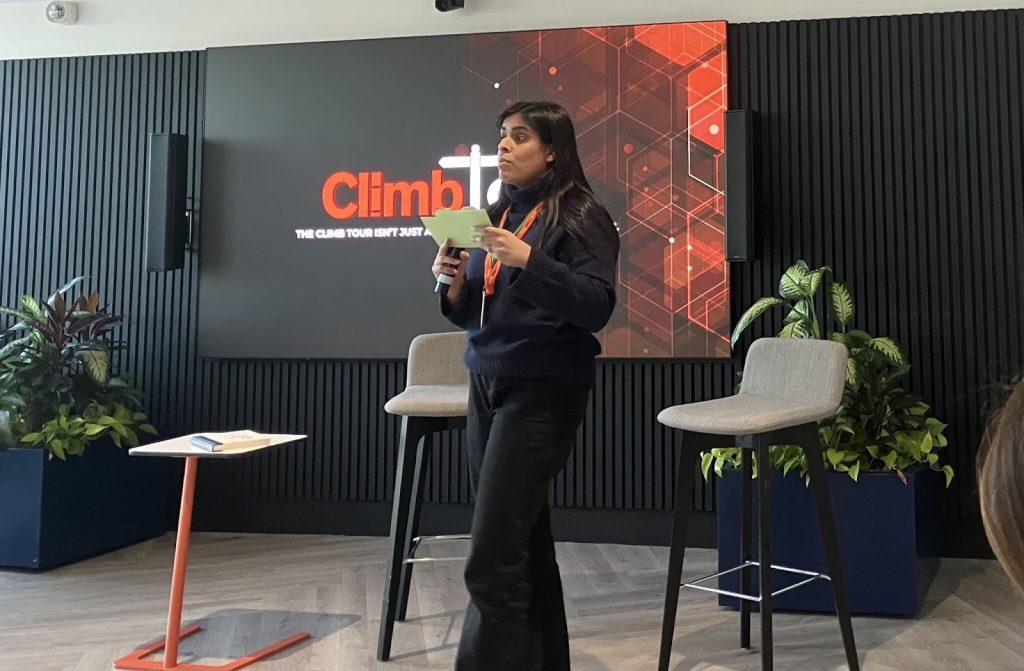
In our talks, we explored a simple but powerful idea:
That many of the defining moments in our careers don’t come from grand strategies or formal structures — but from small, often unplanned interactions.
A conversation.
A piece of advice.
A moment of encouragement.
When asked, those in the room could point to a person or moment that influenced their path.
And that raises an important question:
Who gets access to those moments — and who doesn’t?
A growing disconnect
F4S also spoke about the reality facing young people today.
With rapid changes in the world of work — from evolving skills demands to the rise of AI — the pathway from education into employment is becoming less clear and less predictable.
At the same time:
- Many young people lack exposure to different careers and industries
- Teachers are increasingly time-poor and stretched
- Access to professional networks remains uneven
The result isn’t a lack of talent —
it’s a lack of visibility.
And that’s where opportunity begins to break down.
Why this matters for business
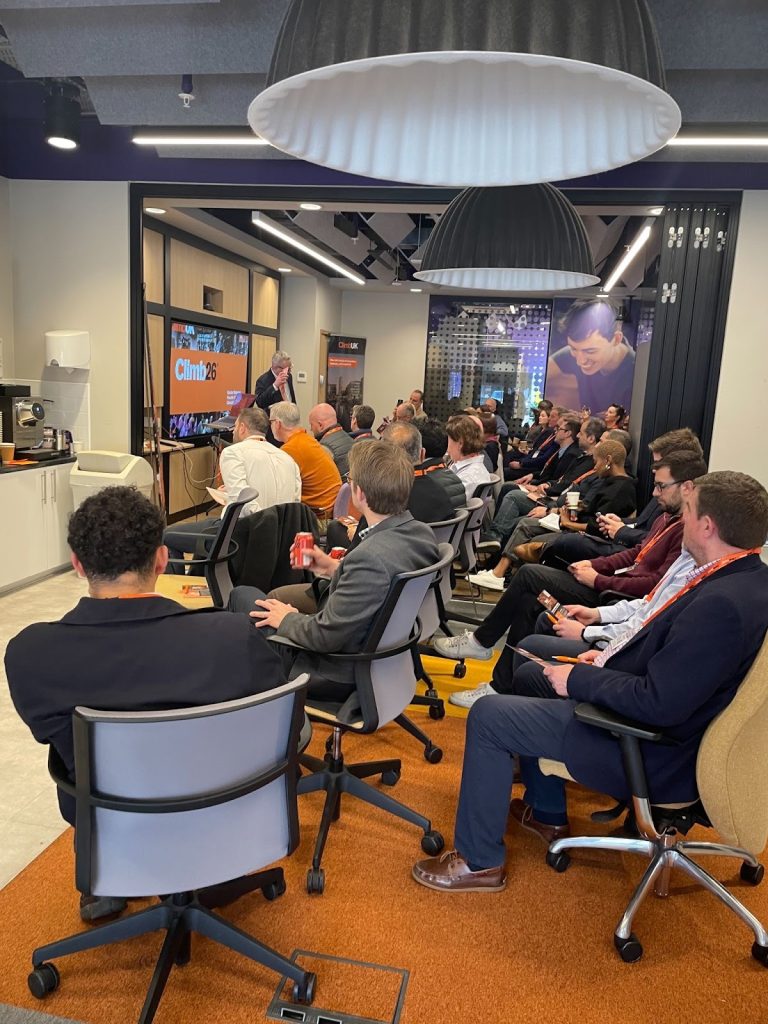
For the audience in the room, this wasn’t framed as a distant social issue.
It’s a business challenge.
The future workforce is already in classrooms today.
And the gap between education and industry has a direct impact on:
- Talent pipelines
- Skills readiness
- Diversity of thought and experience
What became clear in the room is that many professionals recognised this — and also recognised their own role within it.
Because most careers are not built on qualifications alone.
They are shaped by:
- Exposure
- Conversations
- Networks
Things that are not equally accessible to all.
Bridging the gap
At F4S, our work focuses on making those moments of exposure easier to access.
Through our programmes, we connect schools with professionals — helping students gain insight into real careers, and supporting teachers to bring the world of work into the classroom in a meaningful and manageable way.
What we’ve learned — particularly through regional programmes — is that local context matters.
When schools are connected with relevant professionals, and when those relationships are supported and sustained:
- Students begin to see what’s possible
- Teachers feel more equipped
- Businesses engage with future talent in a more meaningful way
A shared responsibility
One of the most encouraging outcomes from the events has been the level of engagement from attendees.
There was a genuine appetite not just to listen — but to act.
Several individuals have reached out following the sessions to explore how they could support — whether through volunteering their time, sharing their experience, or engaging at an organisational level.
It reinforced something important:
Supporting the next generation isn’t just the responsibility of schools or charities.
It’s a shared responsibility.
As a society — and as professionals — we all play a role in shaping what young people see as possible.
Continuing the conversation

F4S is always open to speaking with individuals and organisations who want to be part of this work.
Whether that’s:
- Volunteering your time and expertise
- Exploring corporate partnerships
- Or simply learning more about how to get involved
Because when more people step into that space — more opportunities are created.
And often, it starts with something small.
From how we pay for our morning coffee to how businesses manage millions of pounds, technology is transforming the world of finance at a rapid pace. This intersection of finance and technology, known as fintech, is one of the fastest-growing and most exciting industries globally.
But what exactly is fintech, and why should it matter to students?
What is Fintech?
Fintech (short for financial technology) refers to the use of technology to improve, automate, and innovate financial services. It’s all about making financial processes faster, smarter, and more accessible.
You’ve likely already interacted with fintech in your everyday life without even realising it. Examples include:
- Mobile banking apps that let you manage your money instantly
- Digital wallets that allow you to pay with your phone
- Online platforms that make investing more accessible
In simple terms, fintech is changing how we save, spend, borrow, invest, and manage money.
Why is Fintech Important?
Fintech is not just about convenience, it’s reshaping the global economy and creating new opportunities for people and businesses.
Here’s why it matters:
- Accessibility: Fintech makes financial services available to more people, including those who may not have access to traditional banks
- Innovation: It’s driving new ideas, from cryptocurrency to AI-driven financial planning
- Efficiency: Technology is making financial systems faster, safer, and more cost-effective
- Global impact: Fintech connects people and businesses across the world
As the industry continues to grow, so does the demand for skilled professionals who can shape its future.
Careers in Fintech
Fintech offers a wide range of career paths and it’s not just for people who love maths or want to work in banking.
From the apps you use every day to global financial systems, there are roles for different skills and interests, including:
- Software Development: Building apps like mobile banking platforms
- Data & AI: Using data to spot trends and improve services
- Cybersecurity: Keeping financial information safe
- Product & UX Design: Making apps easy and enjoyable to use
- Marketing & Communications: Promoting fintech products and services
- Finance & Trading: Making decisions using data and market insights
You’re probably already using fintech without realising it, like mobile banking apps, digital wallets (e.g. Apple Pay), or platforms that help people invest.
The people behind these tools are working in fintech right now, solving problems, creating new ideas, and shaping the future of money.
Why Students Should Care
Fintech isn’t just an industry, it’s the future of how the world works.
By understanding fintech now, students can:
- Explore exciting and future-focused career paths
- Develop valuable digital and financial skills
- Stay informed about changes shaping the global economy
- Gain inspiration from real-world professionals
The earlier you start exploring, the more opportunities you can unlock.
Bring Fintech to Life with F4S
Helping students understand fintech starts with real-world exposure and that’s where F4S comes in.
Through the F4S platform, you can connect your students with professionals working in fintech, finance, and technology through virtual assemblies and live sessions. These encounters give students the chance to hear real career journeys, ask questions, and see how the skills they’re learning apply in the real world.
It’s a simple, impactful way to inspire your students and support Gatsby Benchmarks by providing meaningful encounters with employers.
Ready to get started?
Log in to your F4S account to book a virtual or in-person session and introduce your students to careers in fintech.
New to F4S? Create a free account today and start connecting your students with industry professionals.
This March, Founders4Schools (F4S) partnered with Hitachi to bring sustainability, innovation, and career insight into classrooms across the UK. Sustainability Month is about more than a single topic—it’s about giving students the tools, knowledge, and inspiration to shape the world they will inherit.
Real Impact for Students
Over the month, students engaged with Hitachi volunteers, including engineers, sustainability specialists, and cyber security professionals. Through interactive sessions, students were able to:
- See how subjects like science, computing, and geography apply to real-world roles
- Explore careers in STEM, sustainability, leadership, and innovation
- Understand how organisations measure and manage social and environmental impact
- Learn how their skills can contribute to the United Nations Sustainable Development Goals (SDGs)
These encounters support careers education, align with Gatsby Benchmarks, and give students clarity about their next steps.
Spotlight on Hitachi Roles
Students got a glimpse of exciting roles such as:
- Senior Environmental Specialist – Leading sustainability initiatives across projects
- Tender & Sustainability Specialist – Integrating sustainability into business decisions
- Control Systems Engineer – Applying STEM skills to automation and industrial solutions
- Engineering Manager – Leading teams to deliver innovation and impact
- Penetration Testing Service Delivery Coordinator – Protecting systems and organisations from cyber risks
Connecting the Classroom to Careers
By meeting Hitachi professionals, students could ask questions, explore skills, and understand pathways into apprenticeships, internships, and graduate programmes. This brings careers learning to life, helping students see how sustainability, technology, and leadership intersect in real jobs.
Thank You to Our Volunteers
A huge thank you to all the Hitachi volunteers who gave their time and expertise. Your insights and passion have helped students understand that sustainability isn’t just an abstract concept—it’s a real, achievable part of their future careers.
📌 Teachers and careers advisors: You can still book a Hitachi volunteer session for your students via the F4S platform: https://f4s.app.digitalboost.org.uk/dashboard
Together, F4S and Hitachi are inspiring the next generation of changemakers, showing that sustainability is the foundation of the future of work.
On 10th March, students and educators joined us for a Virtual Assembly with Hitachi Energy, where industry professionals shared their career journeys, insights into the energy sector, and practical advice for young people exploring their future pathways.
The session highlighted the wide range of opportunities available across the industry, from engineering and project management to marketing and early careers, while reinforcing that there is no single route into these roles. They shared their honest reflections on their own journeys, reminding students that starting at entry level is a valuable first step and that career paths often evolve over time.
A key theme throughout the discussion was the importance of taking ownership of your development.
“Look at the job you want next, identify what you’re missing, and start working on it.” - Harriet Clark
Students were also encouraged to embrace their individuality and recognise the value of creativity within STEM careers:
“Take the parts of your personality you love and bring them into your work.” - Lucy Caraballo.
Sustainability emerged as another central topic, with speakers sharing their passion for contributing to a more sustainable future through their work in the energy sector. Alongside this, the importance of resilience and support systems was emphasised, reminding students that setbacks are part of the journey and that they don’t have to navigate their careers alone.
The session also encouraged more young people, particularly girls, to consider careers in the industry, helping to break down stereotypes and promote inclusivity across STEM fields.
We would like to thank our speakers Harriet Clark, Lucy Caraballo, Phill Corner, and Mihir Dhonsale for sharing their experiences and inspiring the next generation.
Educators who missed the session can access the full recording on your F4S dashboard. Or you can watch it here 👇
As educators, we know that students are more motivated when they can see how what they learn in the classroom connects to the real world. That’s where Hitachi Energy comes in. With careers spanning sustainability, engineering, technology, and cybersecurity, Hitachi Energy offers opportunities for students to make a tangible impact on society and the environment.
This isn’t just about jobs—it’s about opening students’ eyes to the skills, knowledge, and values that will define the next generation of changemakers.
Why This Matters for Your Students
- Relevance: Students see how subjects like science, maths, computing, and geography apply in real roles.
- Career Inspiration: Early exposure helps students understand what’s possible and sparks ambition.
- Sustainability in Action: They see how organisations tackle climate change, ethical technology, and social responsibility—core themes in the curriculum and linked to the SDGs.
- Gatsby Benchmarks: Volunteering sessions with Hitachi Energy professionals directly support careers education and meaningful employer encounters.
Hitachi Energy offers exciting opportunities where students can see the real-world impact of STEM, sustainability, and leadership. Here are some key roles your students can explore, with insights on responsibilities, skills, and entry routes.
Senior Environmental Specialist
This role leads projects to reduce environmental impact, ensures compliance with regulations, and embeds sustainable practices across operations. Students can see how environmental science, policy, and project management combine to drive change. Key skills include analytical thinking, problem-solving, and knowledge of environmental regulations. Entry routes often include university degrees in environmental science, sustainability, or engineering, as well as relevant apprenticeships.
Tender & Sustainability Specialist
Professionals in this role prepare project bids while integrating sustainability considerations at every stage. They analyse project requirements, work with teams, and ensure solutions meet environmental and ethical standards. Skills needed include project management, communication, and an understanding of sustainable business practices. Students can enter via university degrees in business, sustainability, or engineering, and through graduate schemes or apprenticeships.
Control Systems Engineer
Control Systems Engineers design and maintain automation and control systems in industrial environments, improving efficiency and safety. This role allows students to apply maths, physics, and computing skills to real-world challenges. Key skills include problem-solving, technical knowledge, and attention to detail. Entry routes include engineering or computing degrees, apprenticeships, or technical training programmes.
Engineering Manager
An Engineering Manager leads teams to deliver complex projects, balances resources, and ensures innovation and quality. Students can see how leadership, teamwork, and strategic thinking are applied to solve practical problems. Skills required include leadership, project management, and technical expertise. Entry routes typically include engineering degrees, graduate schemes, and progression from technical roles.
Penetration Testing Service Delivery Coordinator
This role ensures systems are secure by coordinating penetration testing and identifying vulnerabilities. Students interested in IT and cyber security see how ethical hacking and risk management protect organisations. Skills include IT knowledge, analytical thinking, and communication. Entry routes include computing or cyber security degrees, apprenticeships, and internships in IT security.
Bring Hitachi Energy Into the Classroom
Students don’t just have to read about these careers—they can meet the professionals doing them. Book a volunteer session to let Hitachi Energy staff share insights, answer questions, and inspire students about apprenticeships, internships, and graduate pathways.
📌 Book a Hitachi Energy Volunteer Session: Access the resource here